
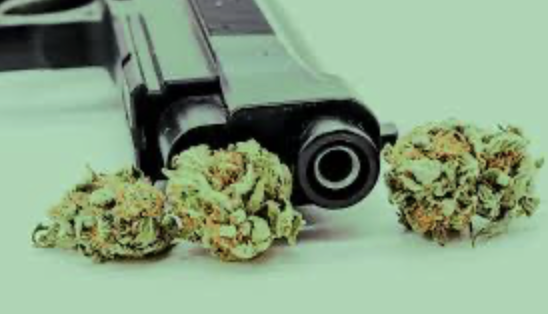
Today the Supreme Court is considering guns and cannabis
Today, the Supreme Court is tackling guns and cannabis, weighing federal law, state legalization and constitutional rights.
Today the Supreme Court is considering guns and cannabis. The August meeting will hear arguments in a case that sits at the intersection of gun rights and cannabis policy, a dispute that reflects decades of legal conflict and rapid cultural change. The case challenges a federal law that bans “unlawful users” of controlled substances from owning firearms and forces judges to balance the Second Amendment against evolving marijuana laws and societal norms.
The roots of the conflict go back to the Gun Control Act of 1968, which banned the possession of firearms by certain groups of people, including illegal drug users. At the time, marijuana was strictly illegal nationwide, and the federal government later reiterated that stance by placing cannabis on Schedule I of the Controlled Substances Act, a category reserved for drugs considered to have a high potential for abuse and which had no accepted medical use.
RELATED: New York opens door to consumer-friendly THC drinks
However, over the past three decades, the legal landscape has changed dramatically. Dozens of states now allow medical marijuana and many allow recreational use. Still, cannabis remains federally illegal, which creates a legal contradiction: A person can legally purchase marijuana under state law, but is still barred from owning a firearm under state law. Legal experts say this tension affects millions of Americans, including medical users and older adults seeking pain relief.
Photo by OpenClipart-Vectors via Pixabay
The case before the courts stems from a prosecution in Texas in which a man admitted to regular marijuana use and was charged with illegal firearm possession. Lower courts dismissed the charges, citing a 2022 Supreme Court precedent that gun regulations must be consistent with the country's historical tradition of firearms regulation. The ruling, widely known for expanding gun rights, has prompted courts across the country to re-examine long-standing restrictions.
The judges now face several possible paths. They could uphold the federal ban, reaffirming the government's authority to disarm drug users for public safety. The Justice Department argues that historic laws disarmed “habitual drunkards,” pointing to a tradition that restricts the possession of firearms by drug-impaired people. Alternatively, the court could view the ban as overbroad, particularly when applied to people who are not intoxicated when possessing a firearm. Such a decision could reshape federal gun laws and trigger challenges for other categories of banned people.
A stricter regulation is also possible. The court could decide the case on technical legal grounds rather than issuing a sweeping Second Amendment ruling, a move that some legal analysts say would avoid destabilizing large swaths of federal firearms law while resolving the dispute.
RELATED: How Canada became the world's cannabis superpower
Guns aside, the case underscores the unclear status of marijuana under federal law. Despite campaign promises and repeated signals that rescheduling would occur quickly, the current government has acted slowly. Marijuana remains in Schedule I, even as federal officials acknowledge the growing disconnect between national policy and legalization at the state level. The delay has real consequences: Until federal classifications change, cannabis users will remain vulnerable to collateral penalties, including firearm bans, housing restrictions and banking restrictions.
The court advises that its decision – expected this summer – could clarify whether constitutional gun rights under state law extend to lawful cannabis users. At the same time, the case highlights a broader political reality: While states are moving forward at breakneck speed, federal reform is proceeding at a cautious pace, leaving millions in a legal gray area that has not been fully resolved by either the courts or the executive branch.
Post a comment: