
Cannacurio #119: Q3 2025 Store License Summary
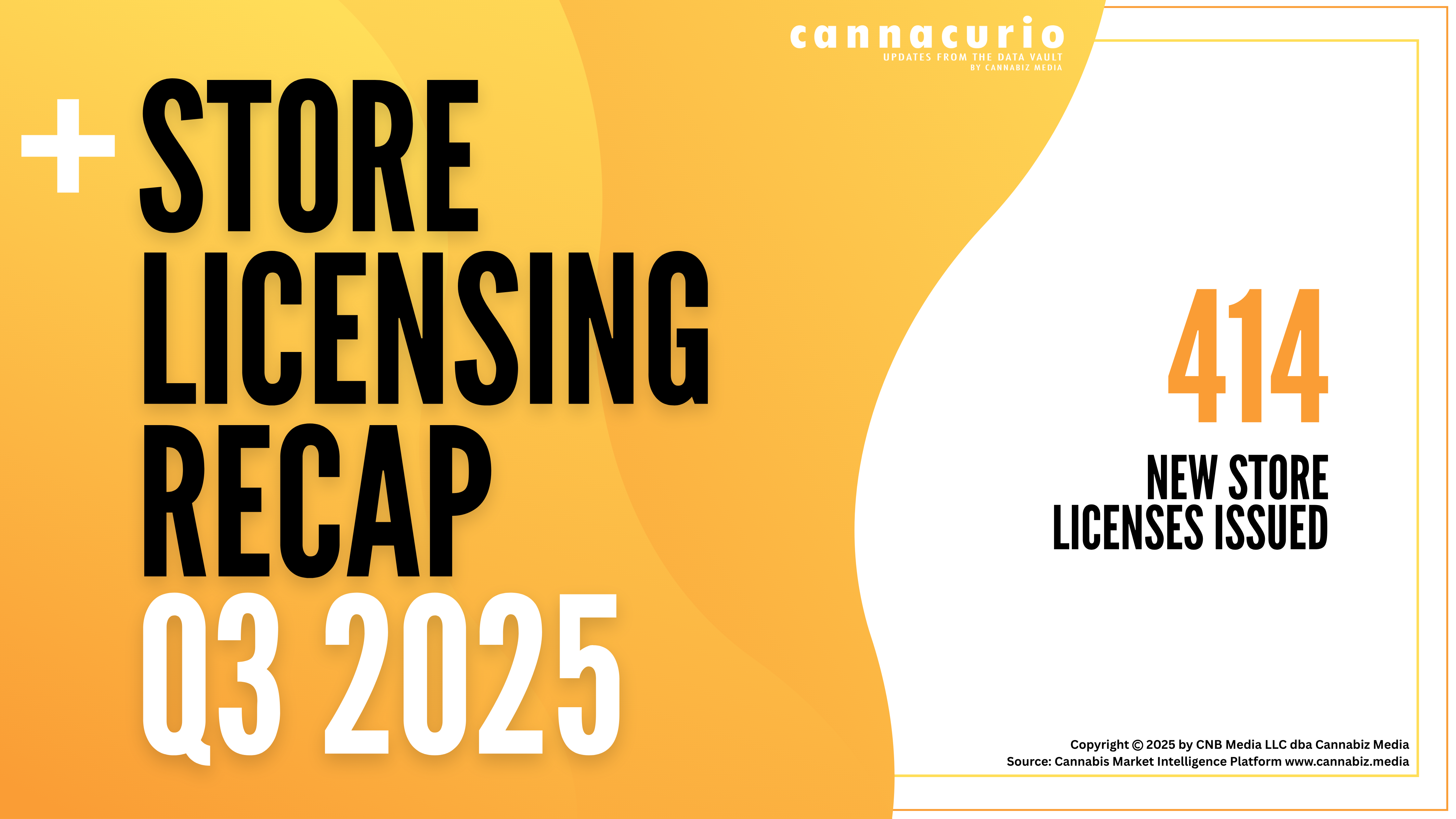
Newly licensed stores continue to make headlines as regulators and MSOs tout these openings. Since they are the main customer license alongside the delivery and consumption lounges, it is no wonder that their comings and goings are recorded. In the third quarter, 24 states issued 414 new licenses nationwide. New York claimed 18% of these new “doors.”
Important point for pharmacies/retailers
- There are 13,392 active store licenses, unchanged from 13,198 at the end of the second quarter
- 24 states added stores in the third quarter, compared to 28 in the second quarter
- There were 414 new store licenses issued in the third quarter, compared to 420 in the second quarter
- Dutchie and Jane lead the tech stack for most of the newly licensed stores
Cannabis Retail Market Trends – Q3 2025
The licensed cannabis retail market continues to face headwinds and opportunities from regulatory changes, changing consumer expectations, pricing pressures and substitution threats. Below are key themes that rose to prominence in the third quarter of 2025.
1. The regulatory tug-of-war over hemp-derived THC and federal classification is heating up
The United States House of Representatives Budget Subcommittee introduced a bill in July that would prohibit the Justice Department from using federal funds to remove cannabis from Schedule I, signaling political opposition to comprehensive federal reform. Meanwhile, the U.S. Senate Budget Committee approved a bipartisan proposal to redefine hemp and ban more than 90% of hemp-derived THC products (including THCA flower and Delta-8/10), which would further restrict the replacement market.
2. Market maturation and price compression in established states for adult consumption
In mature markets like California and Illinois, the industry faces oversupply, price competition and job losses. In a third-quarter 2025 update from Vangst and Whitney Economics, the industry reported approximately 15,000 job losses (-3.4%) due to price compression and saturation.
3. The risk of substitution through hemp and external channels remains – but is trending
While the hemp-derived THC space poses a major competitive threat, impending regulatory action at the federal and state levels suggests that the “loophole” channel may be shrinking – thereby reducing a replacement threat. However, there are still alternatives available to consumers (illegal, hemp-derived, alcohol), so licensed stores must maintain value and differentiation to retain market share.
4. Concentration of license growth
Licensed store growth is accelerating in select states such as New York, New Mexico, Montana, California and Michigan. For retail operators, this means there are geographical opportunities – but this growth can also bring competition and pricing pressure as more stores are added.
Tech stack
Emerald Intel examines the tech stack of Active US cannabis stores. We wanted to get a sense of which providers are making progress in the 414 newly active stores last quarter. Two providers own this ranking: Dutchie and Jane together have 87% of the market share. Although we only found data for 20% of these newly active stores, these two vendors clearly have a strong go-to-market strategy:
Pharmacy/Retail
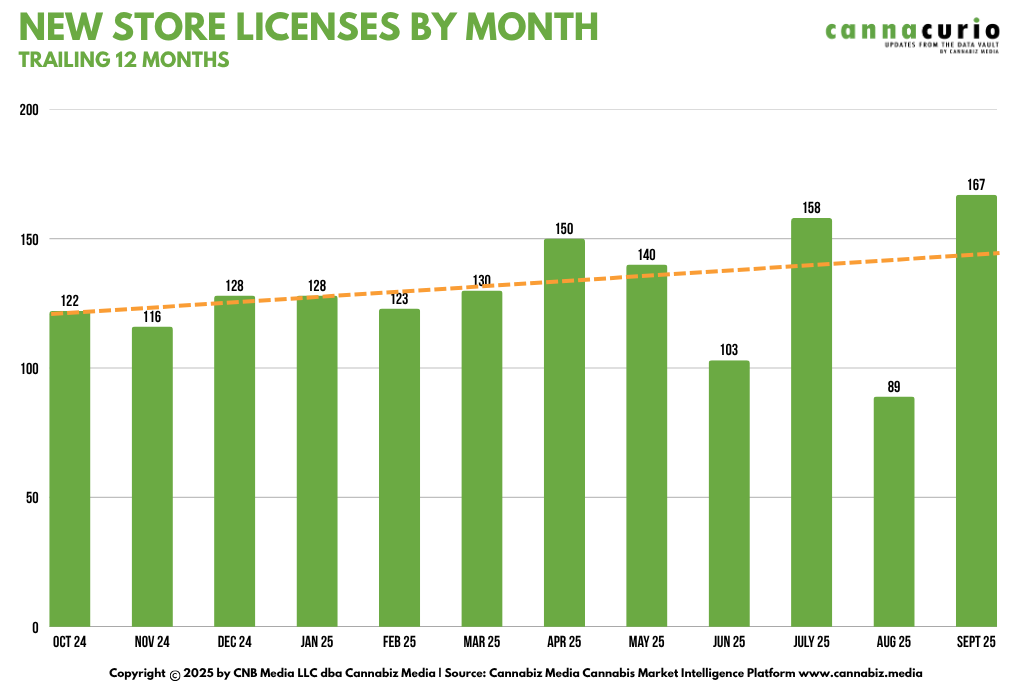
Store openings still generate news and press releases. As licenses that primarily affect customers, they arouse the greatest interest. In some states, they also face strong competition from the illegal market as well as smoke, vape and CBD shops. The chart below and the trend line show a slight uptick in new licenses across the country.
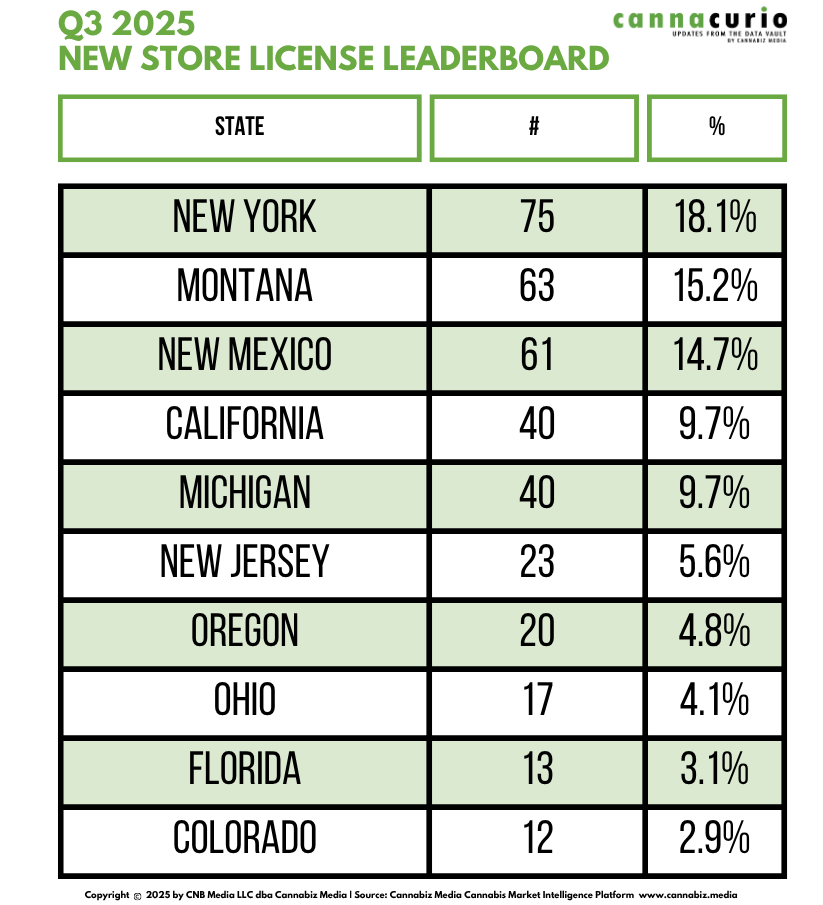
New York has maintained its leading position in the Store Leaderboard since the fourth quarter of 2024; and accounted for nearly twenty percent of all new store licenses issued nationwide in the third quarter.
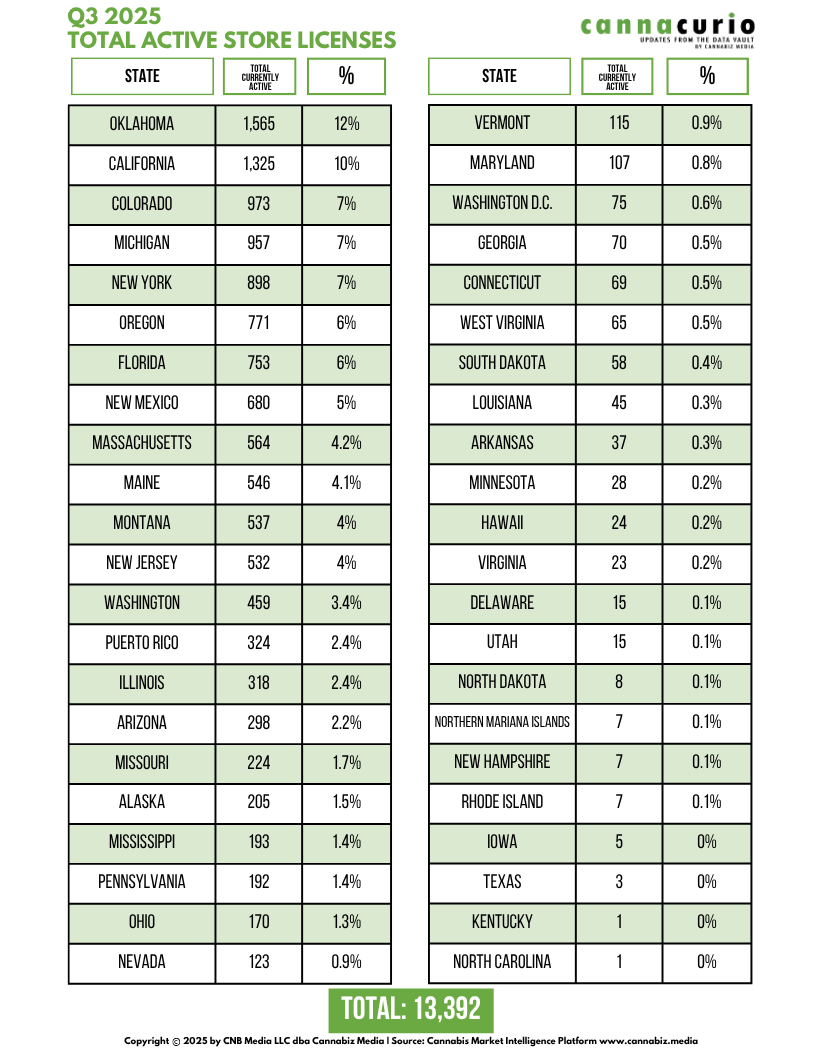
The table below shows the total count of cannabis retailers by state. Despite all the licenses being closed and the ongoing moratorium, Oklahoma still leads the nation.
Diploma
Despite market headwinds, consolidation and competition from hemp and illicit channels, the number of licensed stores continues to grow – a testament to the resilience of the cannabis retail sector. Growth continues to be concentrated in markets such as New York, California and Michigan, while mature states suffer from price and saturation pressures. One upcoming jurisdiction to watch is Virginia, where a newly elected Democratic governor could finally push forward the state's long-delayed cannabis retail program — potentially adding another key market to the national map.
author
Ed Keating is co-founder of Cannabiz Media and oversees the company's data research and government relations. Throughout his career, he has worked with and advised information companies in the compliance area. Ed has led product, marketing and sales while overseeing complex, multi-country product lines in the securities, corporate, UCC, security, environmental and human resources markets.
At Cannabiz Media, Ed enjoys the challenge of working with regulators around the world as he and his team collect corporate, financial and licensing information to track the people, products and companies in the cannabis economy.
Ed graduated from Hamilton College and received his MBA from the Kellogg School of Northwestern University.
Cannabiz Media customers can stay up to date on these and other new licenses through our newsletter, alerts and reporting modules. Subscribe to our newsletter to receive these weekly reports straight to your inbox. Or you can schedule a demo to get more information about how you can access Cannabiz Media's Cannabis Market Intelligence platform yourself and dive deeper into this data.
Cannacurio is a regular column from Cannabiz Media featuring insights from the most comprehensive licensing data platform. Check out Cannacurio posts and podcasts for the latest updates and information.
Post a comment: