

Cannabis legalization is rolling across Europe
Until the end of 2021, the EU was a purely medicinal cannabis market. However, 2022 has welcomed a flurry of legislative reviews and promises to legalize recreational cannabis. Thanks to recent developments, it has become clear that there is still much to be done to standardize, stabilize and scale the industry.
In December 2021, Luxembourg legalized the cultivation of cannabis for recreational purposes. A month earlier – November 2021 – the new German coalition government pledged to legalize recreational cannabis at the start of their term.
This and some other news from different parts of the EU makes it seem like there is light at the end of the continent’s conservative tunnel. The first wave of cannabis legalization on the continent was for medicinal use, which occurred between 2018 and 2021.
Various events anticipate that in 2022 a new wave of recovery-focused legalizations will come into effect. The developments are worth watching and this article examines every detail that EU consumers need to be privy to.
Statement on the legalization of cannabis in Luxembourg
Luxembourg is one of the few countries whose recreational cannabis efforts are expected to have a domino effect in Europe. According to a report, residents over the age of 18 are allowed to grow a maximum of 4 plants for personal use. Users are also allowed to carry around 3 grams of cannabis in public.
According to another version of the report, the THC (tetrahydrocannabinol) ingredient in cannabis is no longer regulated. However, some public areas remain restricted – use of cannabis in such areas will result in fines.
This is a huge change for a country previously known to have fines of up to €2500 for cannabis possession.
In addition, the new regulation decriminalizes the production, sale, and distribution of the substance to the public. The new development opens up a new state-controlled cannabis economy, aimed in part at tackling drug-related crime in Luxembourg.
The international realities surrounding Luxembourg’s decision are bolstered by moves by the new German government to decriminalize recreational cannabis.
Germany in focus
Medical cannabis has always been the standard in Germany. However, the new coalition government promised citizens to ensure the legalization and market regulation of cannabis in the country.
This announcement has since reflected a reduced politicization of the cannabis debate in European society. Many experts believe that it will give priority to other countries on the continent.
Since the announcement of the decriminalization plan, many medical cannabis companies have positioned themselves to lead the country’s effort toward recreational cannabis. The coalition government has promised to keep its promise during the current term of office, but there is still no concrete roadmap towards reality.
Beyond the 2020 bill proposing adult access to cannabis, there have been no new proposals related to the government’s promise. However, in recent months there have been a number of government expert testimonies before lawmakers. This is the first step towards legalizing the product and it remains to be seen how the government will proceed.
One study estimates that enacting recreational cannabis reform in the country could add about $5.3 billion to their tax revenues while creating over 27,000 jobs. This national effect is greater than what countries like Malta will experience, despite being at the forefront of introducing a modest playbook for other European countries to take inspiration from.
How Malta fits into the picture
Malta is the first EU country to legalize recreational cannabis. But the legislation was designed to curb potential disasters. Cannabis for personal use will be decimated on the island once it is no longer for sale. So citizens can use cannabis personally or in social clubs, but not sell it.
As of December 2021, the government allowed citizens to grow a maximum of six plants themselves. Users are also allowed to wear 7 grams of the substance on their body in public. The Legislature also established its own government agency. Finally, citizens can create social cannabis clubs.
Accomplishing this feat has not been easy as since 2017 the government has announced its intention to popularize recreational cannabis. Five years later, the government has finally enforced the four pillars of its Cannabis Reform Act: Cultivation, Possession, Use, and Association.
Although the “unification” aspect of the bill is based directly on the Spanish Social Club proposal, this is a welcome development that will further secure the place of recreational cannabis in European society.
The Spanish Cannabis Law
Recreational cannabis is decriminalized in Spain for any purpose other than sale. You can grow cannabis, use it and even start social clubs. However, you cannot sell. The country allows citizens to store up to 100 grams of cannabis in a private place. For context, Malta only allows up to 50 grams in households.
An important aspect of Spanish cannabis legalization are “social clubs”. Although these non-profit organizations were first established in 1991, their existence has only recently been legalized. Once legalized, the social club pattern will be replicated in other countries and is fast becoming a regulated alternative to commercial recreational cannabis in Europe.
Although the country hasn’t fully legalized recreational cannabis, it has decriminalized the cultivation and personal use of the substance.
What is Portugal currently doing in relation to recreational cannabis?
In 2018, Portugal legalized medicinal cannabis, which has since become a major playground for US and Canadian companies. These companies have ensured a steady influx of investment into the country’s cannabis market.
But despite leading the European cannabis scene, the country has struggled to regulate the market. Recent attempts to structure and tightly control the market have resulted in the proposal of two cannabis-related bills in the country. These bills are designed to enable personal consumption, cultivation, and possession.
Unfortunately, these bills have lacked momentum due to government instability and the devastating effects of the COVID-19 pandemic.
The reality in Italy
Recently there was a referendum to legalize domestic cannabis cultivation in Italy. The referendum will further decriminalize possession of the substance. This referendum comes after several failed attempts to legalize cannabis and aims to change the country’s narcotics law.
If the voting process is successful, citizens will be asked to vote for or against the referendum. According to the country’s prime minister, the coalition government will do nothing to block the cannabis referendum. There is no indication that the opposition party (right) will oppose the referendum. The law will fall victim to politics and the world can only wait and see how the game ends.
Other countries are taking positive steps for recreational cannabis
Despite their problems, Canada and the US are leaders in the legal cannabis market. Many European countries pull legislative weights to avoid being left behind. Although medical marijuana is legal in most countries on the continent, the market is still dominated by foreign companies. If local businesses have a chance to scale, it’s important to embrace recreational cannabis.
For the Netherlands, the first step towards recreational cannabis is to experiment. The country has already started experimenting by supplying the substance to coffee shops, with a system designed to monitor effects.
France still has a long way to go. Regulations surrounding medicinal cannabis remain restricted. However, as part of an effort to better understand the market, the country has proposed a two-year pilot program that will see about 3,000 patients treated with medicinal cannabis.
Impact of the new wave of recreational cannabis laws
Currently, the regulatory and functional cannabis space is as fragmented in Europe as it is in North America. However, the continent lags slightly behind its western counterpart. But if governments play their cards right, it won’t be long before the continent becomes a force to be reckoned with in the cannabis market.
A large part of European cannabis is based on illegal trade, even for medicinal cannabis. According to reports, EUR 354 million worth of illegal medical cannabis is expected to be traded on the European market in 2022. The report further predicted that the number will rise to about 2.3 billion euros by 2026. But with increasing legislative efforts, things should be moving better on the legal side.
According to experts, the new wave of legislation on the continent will lead to more investments, mergers and acquisitions. In an interview with TechCrunch, Todd Harrison said, “We believe M&A will be a priority for all legal cannabis operators. The difference in Europe is that there is an opportunity for non-cannabis players to strategize and conquer the market by integrating cannabis as a CPG (Consumer Package Good) or pharmaceutical option.”
From Todd’s statement, European industry experts are predicting tough competition for the next few years, and that’s all good news. Competition is good for the rapid maturation of any emerging market.
Additionally, trade laws within the EU are expected to facilitate market growth as more countries legalize recreational cannabis. According to David Bonnier, founding partner of Enexis AB, “For example, you can produce cannabis in Portugal and sell it to any EU country as long as you have export/import licenses. As a result, cross-border European trade is relatively fluid and companies can scale relatively quickly if they know what they are doing.”
MORE ON EUROPEAN NEWS, READ MORE..
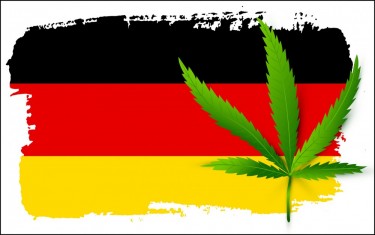
GERMANY LEGALIZES LEISURE WEEDS, STOP EUROPE!
Post a comment: